Autism: Living On The Spetrum
Do I Have Autism Spectrum Disorder? First lets understand what this is. Lets go through some definitions, symptoms, help and just go into some questions/answers. The most pressing question I get “is my child autistic?” We will get into those things but if you have anything to add please use the comment section below so that I may add your information and credit to this article.
Table Of Contents
What Is Autism Spectrum Disorder
Autism spectrum disorder (ASD) is a brain-based disorder that affects a child’s behavior, communication and social skills.
Most children with ASD master early motor skills, such as sitting, crawling, and walking on time, so parents may not initially notice delays in social and communication skills.
For some children, the earliest sign of autism is a loss of language skills which the child had demonstrated previously, accompanied by social withdrawal.
ASD affects all ages, ethnic and socioeconomic groups. It seems to be increasing in frequency, but some of that perceived increase may be due to greater awareness and screening for the condition.
Including milder symptoms of the disorder in the definition may also contribute to the impression of an increase in frequency.
Some Stats…
It is five times more likely to occur in children with a low birth-weight and prematurity than in the general population. White children are more likely to be identified as having ASD than are black or Hispanic children.
Before 2013, ASD was described as a diagnosis with several different sub-diagnoses. In 2013, however, the American Psychiatric Association published a new definition of ASD in the
Do I Have Autism? How To Recognize Signs Of Autism:
Diagnostic and Statistical Manual of Mental Disorders – 5
The diagnosis is now Autism Spectrum Disorder, without different sub diagnoses or types.
The earlier in life the diagnosis of ASD is made, and the younger the child’s age at intervention, the better the prognosis.
Common Signs of Autism In Children:
This is where you might do a self diagnosis to figure out the answer to that question, do I have autism?
The hallmark of ASD is impaired social interaction.
Even in infancy, a baby with ASD may not respond to people, or may focus on one object for long periods of time.
The following are examples of how a child with ASD may act:
- No babbling or pointing by age 1 year
- No response to his/her own name
- Loss of language skills which had been present
- Poor eye contact
- No smiling or social responsiveness
- Impaired ability to have relationships
- Impaired ability to converse
- Impairment of imaginative play
- Repeats what others say without understanding the meaning, called echolalia
- Restricted patterns of interest that are abnormal in intensity and focus
- Rigid adherence to routines and rituals
- A good rote memory, especially for numbers, letters, songs, or a specific topic
- Rocks, spins, sways, twirls fingers, walks on toes for a long time or flaps hands (stereotypic behavior)
- Doesn’t seem to feel pain
- May be hypersensitive or insensitive to smells, sounds, lights, textures and touch
Children with ASD may have associated medical conditions, such as tuberous sclerosis, Fragile X syndrome, other learning disabilities, seizures, Tourette syndrome, and attention deficit hyperactivity disorder.
Causes of Autism
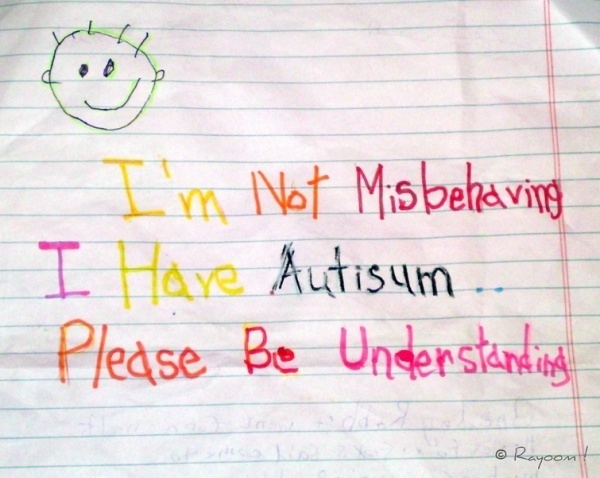
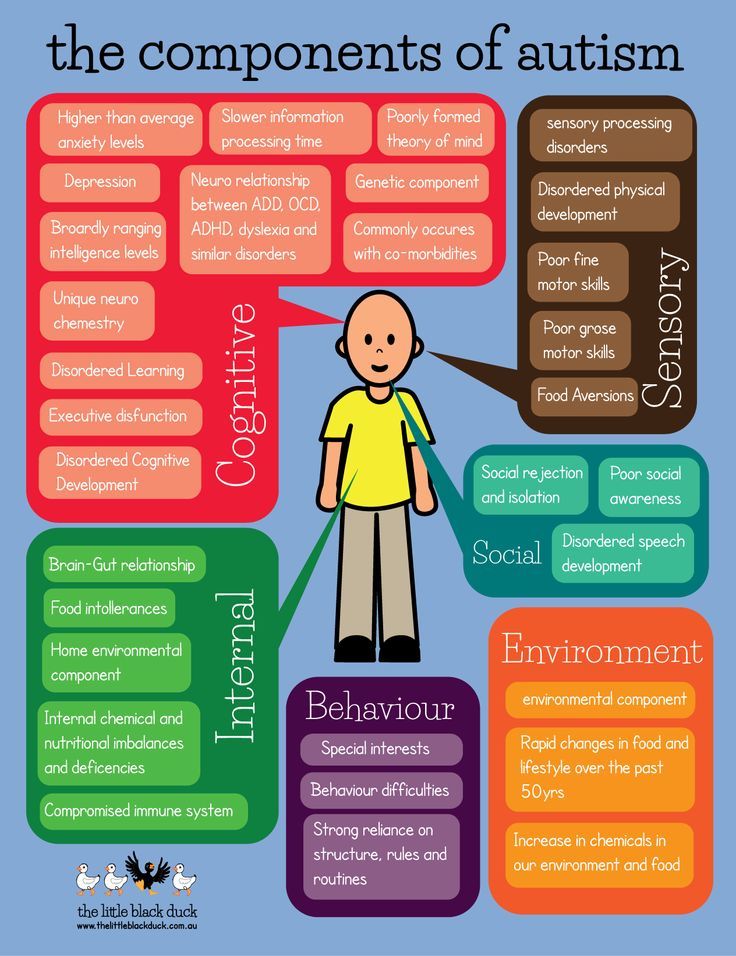
Parental behaviors and methods are not responsible for ASD. The causes of ASD aren’t well understood. It’s probable that both genetics and environment contribute to the development of ASD.
Several genes have been identified which are associated with the disorder. Some studies have shown that neurotransmitters (chemicals which carry signals from nerve to nerve) in the brain are abnormal, e.g. serotonin.
If a family already has a child diagnosed with ASD, the chances that siblings might also have ASD are 5 to 10 times higher than the general population.
THERE IS NO LINK BETWEEN THE MMR VACCINE AND ASD.
Early Signs of ASD
One of the most important differences between children with ASD and other children is a delay or lack of joint attention, looking back and forth between an object or an event and another person, connecting with that person.
It’s basic to later communication and social skills. Delays in joint attention are found in most children with ASD, but rarely in children with other types of developmental problems.
Milestones in understanding language and using gestures occur at:
- 10-12 months of age: most children with normal development will immediately look in the direction a parent points to visualize an object, look back at the parent and mimics their expression. Children with ASD usually ignore the parent.
- 12-14 months: children point to objects that they want. A child with ASD may take the parent’s hand, and lead the parent to the object.
- 14-16 months: most children point at objects they find interesting, looking back and forth between the parent and the object. A child with ASD will point to an object, wanting the parent to get it for him, but without interest in connecting with the parent.
Almost all children with ASD show delays in language. They may use unusual words, or say letters and numbers.
Most children have a stage in which they repeat what they hear, but children with ASD will repeat what they heard for longer periods of time.
They repeat dialogue from movies or conversations in the tones in which they heard them.
Making the Diagnosis
Making the diagnosis of ASD can be complicated because there is no specific medical test. Diagnosis must be made using information from the parents and observations during well-child checkups.
How do I get a diagnosis for Autism?
As soon as ASD is suspected, a child should be referred for a full evaluation. It can be done by a doctor or psychologist with expertise in ASD.
Evaluation by a team of specialists is preferred, with developmental pediatricians, neurologists, psychiatrists, psychologists, speech or language pathologists, educators and social workers. Some school systems do evaluations.
A typical evaluation includes:
- Careful observation of play and interactions with others
- History and physical examination
- Developmental assessment of skills (motor, language, social, self-help, intellectual). ASD is suspected when language and social skills
- are significantly more impaired than is overall development
- Hearing test
- Language evaluation
Diagnosis of ASD is made by applying the DSM-specified criteria to the information collected.
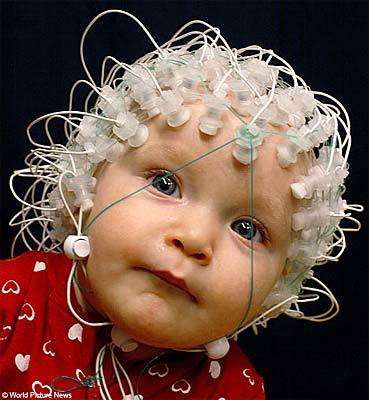
Medical tests may be useful in determining if ASD is associated with a known syndrome or medical condition.
Genetic tests should be offered. Currently, 10-20 percent of children with ASD have abnormalities of their chromosomes.
Genetic testing should be strongly considered if a child has unusual physical features, developmental delays, and/or a family history of fragile X syndrome or intellectual disability.
Fragile X syndrome may be present in up to 2 percent of boys with ASD; Rett syndrome should be considered in girls.
Lead testing for elevated blood levels of lead should be performed. Some physicians recommend that all children be tested for lead at age 1 year.
Other tests may be performed as indicated, such as a magnetic resonance imaging (MRI) scan of the brain, tests for metabolic disorders, such as thyroid disease, and for iron and/or vitamin deficiencies. An electroencephalogram (EEG) can evaluate for seizure activity in the brain.
Treatment
There is no cure for autism, but there are treatments, even for children with the most severe autism. The most effective treatments are discussed here.
Applied Behavioral Analysis. It is, by far, the best researched and understood mode of therapy for ASD. It’s also the most effective. Applied behavior analysis (ABA) is based on the behavioral theory that appropriate behavior can be taught through a system of rewards and consequences.
“Applied” refers to teaching only the behaviors that are practical – needed in everyday living.
“Behavior” refers to the focus of therapy. “Analysis” refers to the emphasis on interventions which can be measured.
ABA is an intense form of therapy which starts with what are called “discrete trials.”
It consists of a therapist asking the child for a particular behavior. If the child performs the requested behavior, he is rewarded.
Often the reward is a small piece of candy or another reward which is meaningful to the child. If he does not comply, he doesn’t receive the reward, and the command is repeated.
The behaviors taught are tailored to each child’s needs and abilities. As the child incorporates the behavior, the therapist takes the activity out of the classroom or home setting to where the child will use the behavior in the real world.
Over time, the child learns to perform the behavior without the reward.
ABA can be very expensive and can be very intense, up to 40 hours per week with a therapist, with parents using the method in addition. Ideally, the training takes place throughout the child’s waking hours.
Research shows that 20 hours per week of ABA can still be beneficial, but with 10 hours per week or less, the therapy will have no effect.
Using this method, the therapist may be able to teach the child to function so well that he or she catches up to peers.
Speech Therapy.
Virtually all people with autism have problems with language. Some people with autism don’t speak at all. Speech therapy is likely to be helpful for everyone with autism.
Occupational Therapy.
Occupational therapy emphasizes daily living skills. An occupational therapist may also be skilled in sensory integration therapy, which is used for people with autism who are hypersensitive to sound, light and touch. The child learns how to manage the stimulation.
Social Skills Therapy.
Many children with autism have difficulty interacting with people. Social skills therapy can help them learn to interact with peers.
Physical Therapy.
Many people with autism have gross motor delays and some have poor muscle tone. Physical therapy can help build strength and coordination.
Play Therapy.
Autistic children need help learning how to play. This type of therapy also helps build speech, community and social skills.

Behavior Therapy.
Children with autism are often frustrated and hypersensitive to sounds, light and touch. Behavior therapists figure out the reason behind negative behavior, and recommend changes to the environment.
Visually Based Therapy.
This may be especially helpful with children who are visual thinkers.
Some visual therapies use picture-based systems. Video-modeling, video games and electronic communication systems are also useful for teaching communication skills.
Many people communicate with picture cards.
Whether cut from magazines, printed from a computer, or purchased as a set, the pictorial cards can help nonverbal people to communicate their needs and ideas.
Images are a form of communication which can be understood by everyone.
Claims made by the originator of the card system, Picture Exchange Communication System (PECS) include: decreased negative behaviors that were caused by frustration; increased availability for learning and interaction; increased relatedness and emotional closeness; and building spoken language skills.
The name-brand PECS can be expensive. Using a picture system can cost almost nothing, by making cards with images cut from magazines.
There are now iPad apps for autistic children, which catch their attention with bright colors and sounds.
There are also video games which appeal to autistic children.
Helps for Everyday Living
Some techniques and suggestions for everyday living include:
Communication: Speak less, using simple words that are heard often in day-to-day living. Express one idea at a time, in the order in which they will happen. Separate ideas with pauses.
Use positive statements, such as “Close the door” to tell the child what to do, rather than negative statements, such as “Don’t leave the door open”, which tells children what not to do.
Use statements rather than questions. For example, “Get a book for a story,” rather than, “Do you want to get a book for a story?”
Attention/following instructions: Approach the child from the front. Get down to his level for eye contact. Model the behavior you want to see, and give one instruction at a time. Reward him with positive words.
Sensory processing: Think about the environment and what could cause strong reactions. Provide a quiet space.
Even the idea of teaching your child to function independently can feel overwhelming. One of the greatest resources parents have is each other.
Find support within a community of other parents and children.
Peer support – interacting with other parents, is an excellent way of learning about new developments.
As, or even more importantly, strength to face the challenges of raising an autistic child is found in other parents; they can also be the greatest source of comfort.
Celebrate yours and your child’s triumphs with other parents, see a world full of colors and see the ability in disabilities.