When Do Babies Start Teething? This Can Begin Before Birth!
When do babies start teething: The idea of it is so exciting to new parents. All new milestones are! Slowly but surely, this means that solid foods are on the way, and your beautiful baby will start growing up so fast. My baby girl now is almost 7 months. She will be on the first day of the new year - 2016. Way too fast for me.
Parents that have been there before know that teething can often times not be so much exciting, as it can be painful.
Painful not just for the poor little one that is dealing with the literal pain of pushing a tooth through their gum, but painful to listen to their cries while they deal with these symptoms. Teething just seems to be one of those things that you have to “get “through”.
There can be a lot to learn as you are going through these stages. Let’s start at the beginning and walk through everything that you might want to know, and I will provide you with some tips to make things a little more bearable for all involved.
What, exactly, are we talking about when we say teething?
Teething is when your infant begins to show signs of a tooth breaking through their gums. It sounds as pleasant as it probably feels.
On rare occasions newborn babies can be born with a tooth or two already erupted. More commonly they are born without teeth and greet you with that big toothless smile.
Or I like to call it, the “Gummie smile”.
Table Of Contents
When Do Babies Start Teething?
At what age do teeth start coming in?
Like everything in life, it will vary by child.
(See above, re: it is a possibility to be born with teeth.)
Baby Teething Age
In general, the average age that children will start to show signs of teething is going to be between 3 months and up to 1 year old.
That is a big gap of time and there is a lot going on in those little mouths. Every single one of our kids are different, so we cannot expect them to develop on the same timeline.
If you have any concerns, go ahead and ask your pediatrician. They will be able to examine your baby and put any concerns to rest, or to refer you to a pediatric dentist should the need arise. Most likely, everything is fine.
Is there an order to which teeth come in and when?
There is!
For the most part, the first tooth to come through is going to be one of the bottom front teeth.
Usually, the second tooth to come in is his little buddy tooth right next to him on the bottom jaw. You might notice that these teeth will start popping up like weeds after this point!
Before you know it there are more and more showing up.
The next couple of teeth to come in are the two front teeth.
From that point on, they will generally start to fill in from the center teeth out. The molars are the last to come in. These can take up to 33 months before you see them fully come in!
You can find a handful of illustrated guides online to that show the average age, and corresponding tooth that will erupt.[1]
The molars are often the most painful for the little ones, and for obvious reason.
They are the biggest.
They can also take a bit longer to fully erupt. I have heard many parents say that these last teeth were the worst for their children. Luckily, they are last so you will have had plenty of experience on how your child handles the sensation, and how you can calm them down.
Again, if you have any concern about the teeth coming in, don’t hesitate to make an appointment with trusted dentist, or find yourself a pediatric dentist. When all is said and done, your child will have 20 pearly whites.
Signs of Teething
But I don’t see anything yet. What are the signs and symptoms?
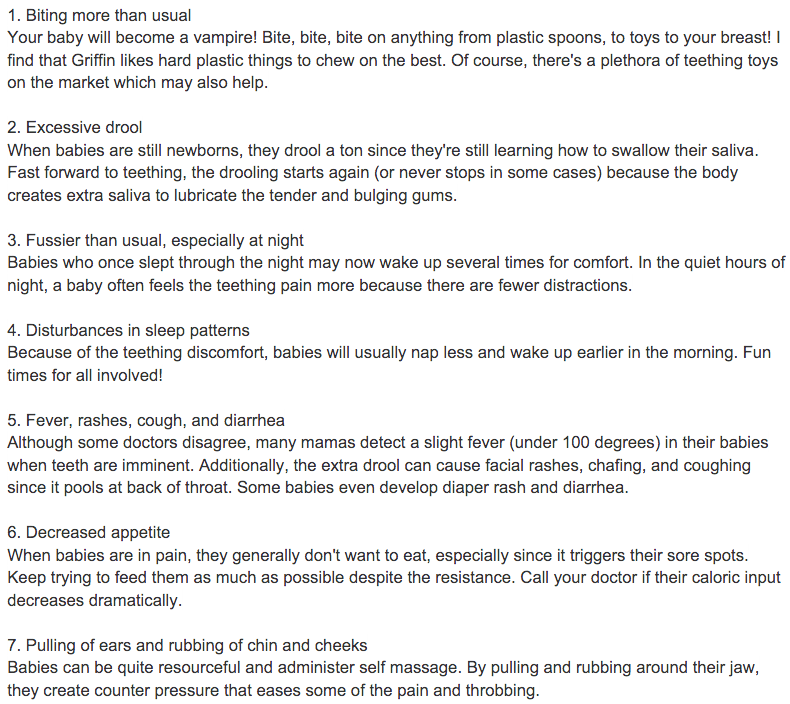
When babies start teething they start drooling.
A lot.
Lots of drool!
This isn’t the normal amount you see on an every day basis. You’ll pick up on it quickly.
They will also start chewing on things. Anything. Everything.
Toys, furniture, clothes, the pets, their fingers, your face, etc.
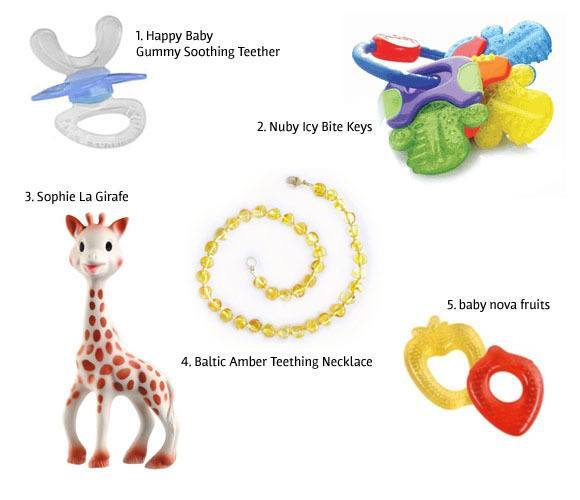
The chewing relieves some of the pressure and soreness that they are feeling. It is natural for them to do this. You may want to invest in some furniture guards once you see this happening, or plan ahead and just put those on the furniture before your little termite starts gnawing away at the crib railing.
Those little teeth do leave quite the mark.
Some other signs are irritability.
Teething can plain put your angel in a bad mood. For whatever reason, I have noticed that these moods tend to strike most often in the middle of the night.
You might find that you are again having some sleepless nights with your baby, and the cause is teething. It seems to coincide nicely with maternity leave ending, and having to get back into the swing of things at work!
Symptoms Of Teething
Some of these symptoms are not believed to be caused by teething, but from personal and anecdotal evidence, I do believe that these issue are strongly linked.
Just be aware, and be prepared.
Teething can cause some pretty unexpected changes in your child.
They can develop a teething rash around their mouth because of the drooling.
To prevent this, try to be vigilant about making sure the child’s mouth is wiped off as often as is needed. Do not let the drool just flow forth, and not be cleaned up. You can also rub some Vaseline on around their mouth to create a barrier.
Some other baby teething symptoms can include diarrhea.
Who would have thought?

It is believed by some that all of the drool production can cause some tummy issues. They don’t just spit all of that drool out, you know!
Some of it gets swallowed.
What can diarrhea lead to? That is right. Diaper rash.
You can try to prevent these by consistent diaper changing, and use of diaper creams (my favorite is Desitin with Zinc). However, there might not be much you can do.
If you find that your little ones are battling one of these terribly uncomfortable rashes, you can again use diaper cream, but you can also sprinkle baking soda in their bath.
This will act as a base to their acidic bum.
Lastly, fever.
The act of teething can cause a child to spike a fever. You might want to use a fever reducer, but be careful not to overdo it!
Be sure you are paying very close attention to the dosing guidelines, and ask your pediatrician a lot of questions to get their medical advice before administering any medication.
Do not forget that all of our children are unique individuals. So if you ever find yourself wondering, is my baby teething, just know all babies are not created equal.
Some kids might not be bothered by teething at all! If this is the case with your child, do not be concerned, but do go right out and buy a lotto ticket. Just kidding! Though, it is not the average experience, it can happen.
Sweet Relief.
What are some of the things that we can do to take away this pain from our children?
There are some products on the market that can be used to numb the gums.
I have heard mixed things about these products, and generally I would advise against using them.
There have been studies linked to hardening of the gums, and thus actually causing more damage and pain. Too often we try to do anything possible to take away our child’s pain.
Don’t get me wrong!
I absolutely hate seeing any child in pain. But this can lead to needlessly medicating. Teething is a natural and normal part of early life. The FDA actually agrees with this sentiment, and advises against these numbing gels.[2]
So what do I recommend?
- A cool washcloth is an old fashioned recommendation.
Run some cold water over the washcloth, and let your child chew on it. That cold sensation will help soothe their swollen gums.
- There are also some great ice teething products on the market.
Do a quick review of products, or ask a local parenting group, to find one that works best for you. Some kids really latch on to these (pun intended!), and some do not.
Mine was never particularly interested in a rubber teething ring when there was the possibility of gnawing on the side of my hand.
- Teething necklaces are also becoming incredible popular over the past 5 years or so.
These are necklaces that are designed to be chewed on. Which makes sense, since your child will likely chew on a necklace that is NOT designed for little teeth. It is a great invention to keep in your arsenal.
Amber teething necklaces are especially trendy, and can even look fashionable.
There are some claims that it is even healthy to gnaw on these, and that it can even boost the immune system. I do not know about that and until I see a scientific study I will remain cautiously unimpressed by that claim. That said, it is still a great teething necklace, immunity boosting or no.
What about nursing? Am I going to get bitten? Do I need to stop?
The answer to these questions are, there is a chance that you’ll get bitten.
Try not to scream or react in any interesting way.
Make sure you let the child know not to do that, but if you create a big fuss your little one is going to want to do it again just to see what happens next.
So, be boring, but insist that it is not okay for them to chew on you while you are nursing.
They will likely do it once or twice, but loose interest and go back to just plain old eating.
Brushing Baby Teeth?
Yes, you will want to begin brushing your child’s teeth.
You can even start this process before teeth emerge.
I always recommend wiping, or using a gum brush on your child’s teeth to keep the gums clean.
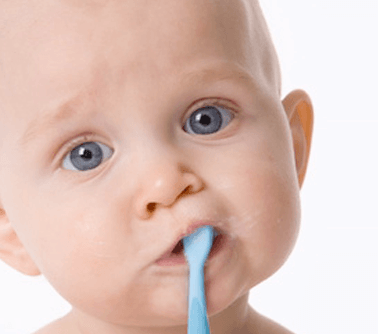
If you do this, not only will your child have nice clean gums but they will be used to the basic motions of teeth cleaning. Once teeth start to come into the picture, oral hygiene is going to be really important.
There are special toothpastes on the market for children that are very young. We are talking under 3 or 4 years old.
Basically, these tooth pastes have no fluoride in them since we do not want our kids swallowing that. Very young kids do not quite grasp the concept of spitting out the toothpaste, so it is important to stick with the toddler brands.
Even once they do get the hang of spitting out the toothpaste, consult with your pediatric dentist before using fully fluorinated toothpaste.
Did someone say dentist?
It is a fantastic idea to take your child to the dentist once they are around 1 year old.
This will get them familiar with the procedure, and they will be more comfortable with it. The checkup is usually very casual, and not particularly involved. The dentist will likely do a brief exam.
Rarely is a cleaning needed until your child gets a little bit older. You can take your child to a pediatric dentist, but you do not have to.
The pediatric dentist will be used to dealing with young children, and may have a more kid friendly atmosphere.
That said, if you have a dentist you really enjoy and feel comfortable with, go ahead and introduce your baby to that dentist!
7 Signs Your Baby Is Teething
- Video by Mama Natural
In short, when do babies start teething? Can never be exact.
Teething can be rough.
You will get breaks in between sets of teeth, and once it is over you will forget about some of the sleepless nights, and the slobbery faces.
Just remember to have some cool washcloths on hand, and do your best to remain calm. This sometimes challenging time will pass before you know it.
References:
- http://www.borngifted.co.uk/images/miscellaneous/teething-chart.jpg
- http://www.fda.gov/ForConsumers/ConsumerUpdates/ucm385817.htm


