Tummy Trouble: Is it Ever Safe For Baby to Sleep on His Tummy?
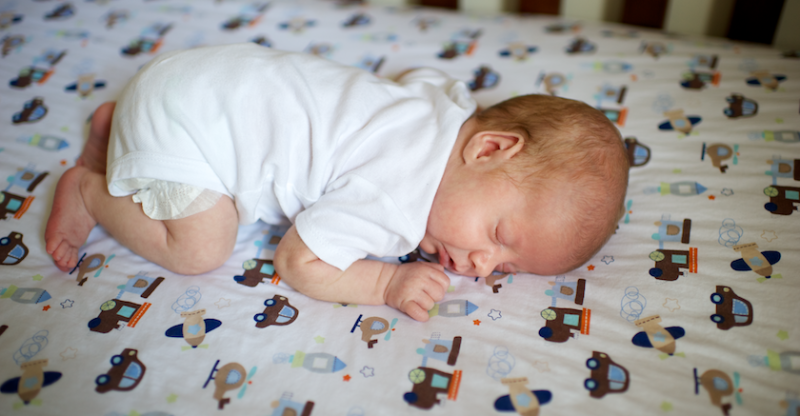
Baby sleeping on stomach : Despite a campaign to reduce the risk of sudden infant death syndrome (SIDS) by placing babies on their backs, a significant number of infants, especially those born prematurely, are still placed on their stomachs or sides to sleep, new research confirms.
Statistics
For the last 20 years, the US government, along with the American Academy of Pediatrics (AAP) and other child advocacy groups have all urged parents to put infants on their backs to sleep for the entire first year to reduce to risk of SIDS.
Shocking new research reveals that nearly 30% of all infants sleep on their side or tummy. Including my own little one for the first few months of life. Below is my little girl, my baby sleeping on stomach.
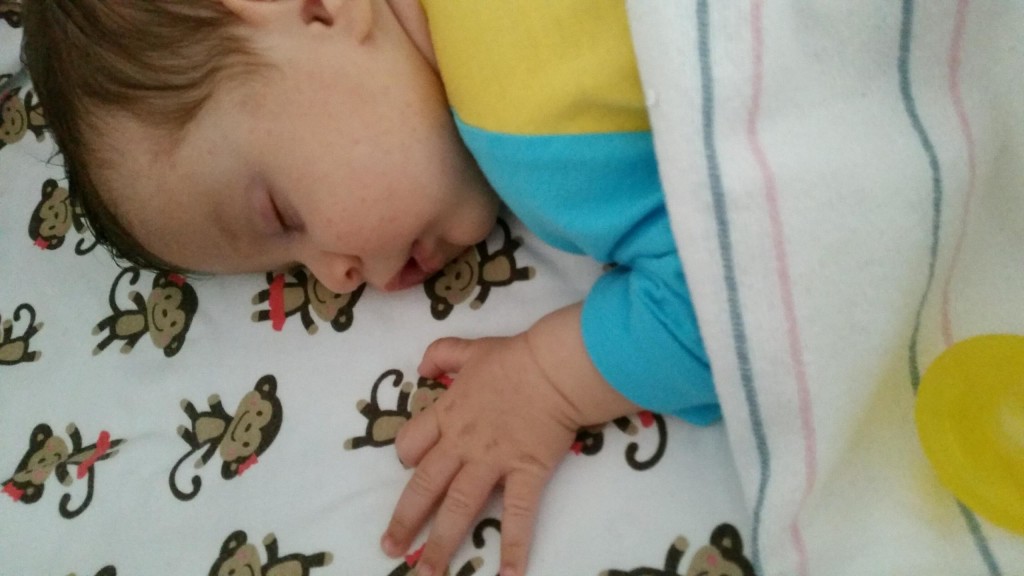
I will say that I would NOT have let her do this but she is able to lift and turn her head side to side. At the daycare, though, they do not allow sleeping on tummy so they wrapped her in a Merlins Magical sleep suit and she slept fine.
After sleeping on her stomach for over a month, she now sleeps on her back in that sleep suit. Thank Goodness.
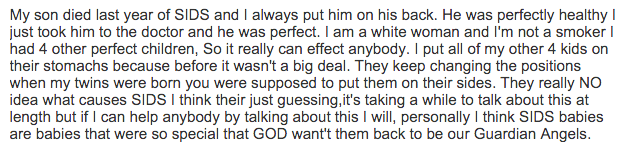
I found this comment from a baby forum that I thought would shed some light on this subject:
SIDS
SIDS is the label assigned to infant deaths that cannot be explained after an autopsy, a thorough examination of the scene, and a review of the baby’s medical history. It is the most common cause of death among infants between one month and one year of age. Last year, over 2,000 infants died of SIDS in the U.S.
Back sleeping increased dramatically after the introduction of the “Back to Sleep” campaign was first introduced 21 years ago, in 1994.
It was a fairly revolutionary change because until that time, parents were urged to put babies to sleep on their stomachs so there would be no danger of them spitting up and choking to death on it. It’s certainly easy to see why parents would get confused with this shift in advisories.
How, then, do parents know what the best position is for their babies?
The answer is a little more complicated than a simple “back” or “tummy” response.
“Since the boom of back sleepers in 1994, there has been little improvement in the SIDS rate since then, and little change in the share of infants who are put to sleep on their backs. This is very worrisome given the rate of SIDS, which has been stagnant over several years,” explained Dr. Sunah Hwang of Boston Children’s Hospital and South Shore Hospital in an interview with NBC News.
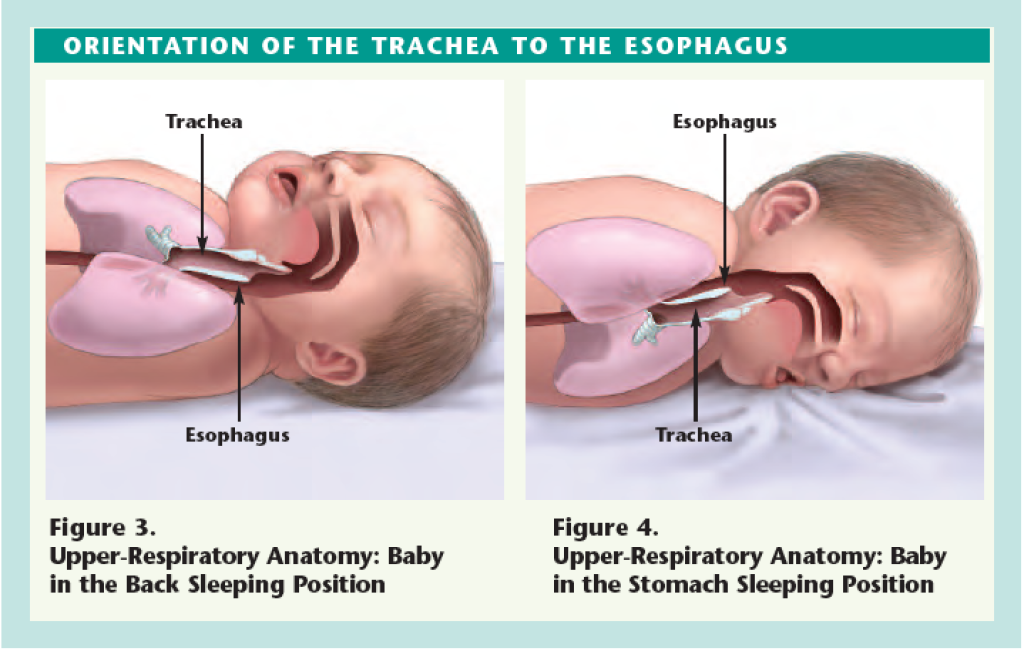
The reason parents disregard the warning to put babies under age 1 to sleep on their backs is because they are worried about babies choking on vomit. What most parents don’t realize though is that our bodies are programmed to react in the rare event that vomiting while sleeping should occur.
The risk of SIDS peaks between 1 and 4 months of age.
When your baby is strong enough to roll over, you don’t need to worry about this so much. He will likely roll through many positions at that point throughout the course of the night.
Once he is rolling over on his own though, you should still put him down to sleep on his back until he is a year old.
Putting your baby to sleep on his back is the biggest precaution to take in order to reduce the risk of SIDS, but you’ll also want to make sure to follow these other precautions for baby sleeping on stomach during the first year:
1 - Firm, Not Soft
To prevent smothering or suffocation, always lay your baby down to sleep on either a firm mattress or surface in a crib or bassinet. The mattress should be covered with a fitted sheet. You don’t need anything else in the crib and that includes blankets, quilts, pillows, sheepskin, stuffed toys, or crib bumpers. If you’re worried about your baby getting cold, use a sleep sack.
2 - Don’t Smoke / Are you still smoking?
If so, here’s a huge reason to stop: Babies that are born to women who smoke during pregnancy are three times more likely to die from SIDS than babies born to nonsmokers. Smoking when you’re pregnant is a major risk factor for SIDS. Secondhand smoke has this effect as well.
3 - Keep Sleeping Baby Close, But Not in Your Bed
When a baby sleeps in the same room as mom, studies show it lowers the risk of SIDS, however, it’s dangerous for a baby to sleep with another person in the same bed.
4 - Breastfeed as Long as You Can
Experts aren’t sure why, but studies prove that breastfeeding your baby can lower the risk of SIDS by as much as 50%. They think it may protect babies from infections that raise their risk to SIDS.
5- Vaccinate Your Baby
Evidence shows babies who’ve been immunized in accordance with recommendations from the AAP and the Center for Disease Control (CDC) have a 50% reduced risk of SIDS compared with babies who aren’t fully immunized.
6 – Don’t Overheat Your Baby
Because overheating may raise a baby’s risk of SIDS, dress your baby in lightweight, comfortable pajamas that cover his arms, legs, hands and feet, and don’t keep the room too warm. If it feels too warm for you, it is too warm for your baby.
When is it safe to let your baby sleep on their stomach?
There’s another bonus to putting your baby to sleep on her back versus baby sleeping on stomach : Babies who sleep on their back suffer from fewer ear infections, fevers, and stuffy noses than those who sleep in other positions!